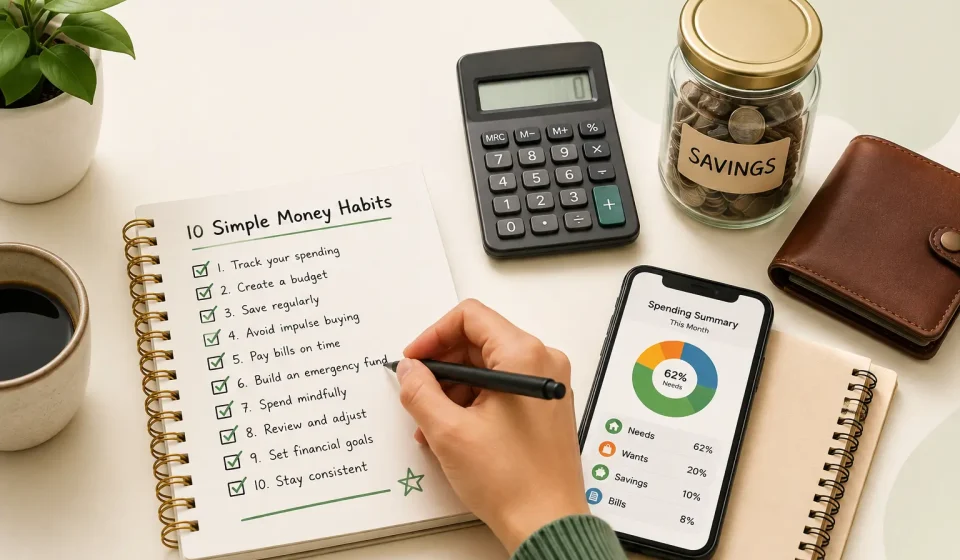

I used to believe that good money habits were something only people with high incomes had.
I thought that once my income increased, the discipline would naturally follow. It didn’t.
What actually improved my finances was not a raise. It was a few small habits I repeated until they became automatic. None of them required more money. They only needed consistency.
Here are the ten habits that made the biggest difference for me, starting with the first.
1. Check Your Account Balance Every Morning
The first habit is checking my account balance every morning.
Not once a week, and not only when I remember to do it. Every day, although it is just a quick look.
This one habit alone stopped me from spending without thinking because I always knew exactly how much money I had.
2. Write Down Every Expense
The second habit is writing down every expense, even the smallest ones.
A cup of tea, a ride in a rickshaw, or a short trip to the store. These small purchases seem harmless on their own, but they can add up to a lot over time.
Once I started tracking them, I noticed spending patterns that I had never seen before.
3. Wait 24 Hours Before Unnecessary Purchases
The third habit is waiting 24 hours before buying anything that is not necessary.
If I saw something I wanted, I gave myself a full day to think about it. Most of the time, the urge went away.
That short pause helped me avoid many purchases I would have later regretted.
4. Pay Yourself First
The fourth habit is paying myself first.
Before paying bills or covering other expenses, I set aside a small amount for savings. It didn’t matter how much it was. What mattered was that saving became the first thing I did, rather than whatever was left over.
5. Review Your Subscriptions Every Month
The fifth habit is reviewing all my subscriptions every month.
It is easy to forget what we are paying for. I found two subscriptions I had not used in months, and they were quietly taking money out of my account.
Canceling them felt like getting a small raise.
6. Separate Needs From Wants
The sixth habit is separating needs from wants before making a purchase.
I started asking myself one simple question:
Do I need this to function, or do I just want it right now?
That one question changed how I spent money more than any app or spreadsheet.
7. Set One Clear Financial Goal at a Time
The seventh habit is setting one clear financial goal at a time.
Trying to fix everything at once left me feeling overwhelmed, and I usually gave up.
Focusing on one goal, such as building a small emergency fund, gave me something specific to work toward.
8. Stop Comparing Your Finances to Others
The eighth habit is avoiding money conversations and social comparisons that make me compare myself to others.
Looking at other people’s spending or lifestyle posts made me feel like I was falling behind, even when my own progress was steady.
Stepping back from those comparisons helped me focus on my financial progress instead of someone else’s highlight reel.
9. Learn One New Money Concept Each Month
The ninth habit is learning one new money concept each month.
Not a full course or certification, just one idea.
Understanding how interest works or what an emergency fund actually does made me feel more in control of my financial decisions.
10. Celebrate Small Wins
The tenth habit is celebrating small wins.
Saving a small amount, staying within a budget for a week, or avoiding an impulse purchase may seem too small to matter.
But recognizing these moments kept me motivated instead of discouraged.
Start With One Habit
None of these habits require a high income or extensive financial knowledge.
They just need to be repeated.
I built them one at a time, not all at once, and that’s why they stayed with me.
If your finances feel stuck right now, you don’t necessarily need a major change. You may simply need one small habit, practiced consistently, until it becomes part of how you naturally handle money.
Start with just one from this list today.
Not all ten. Just one.
That’s how real financial change can begin.